
Description
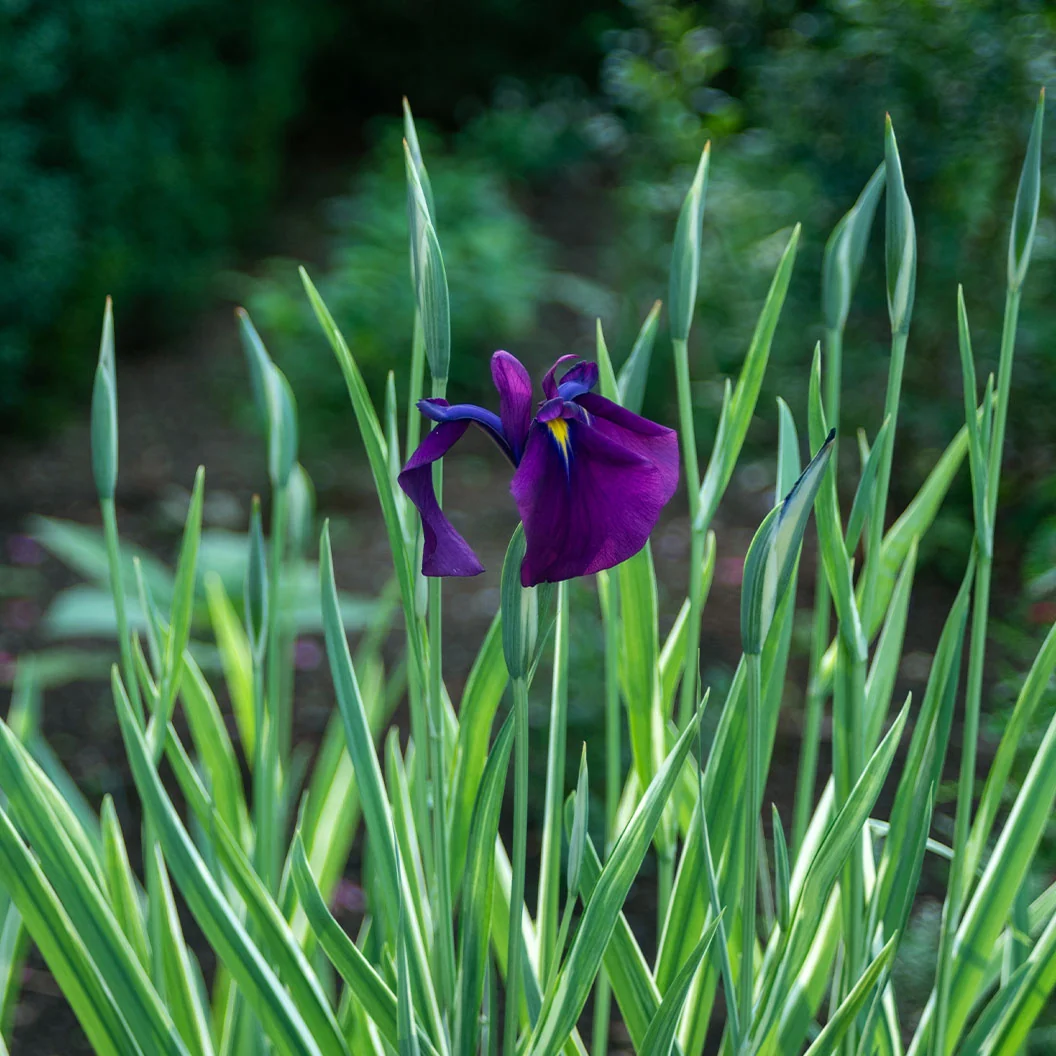
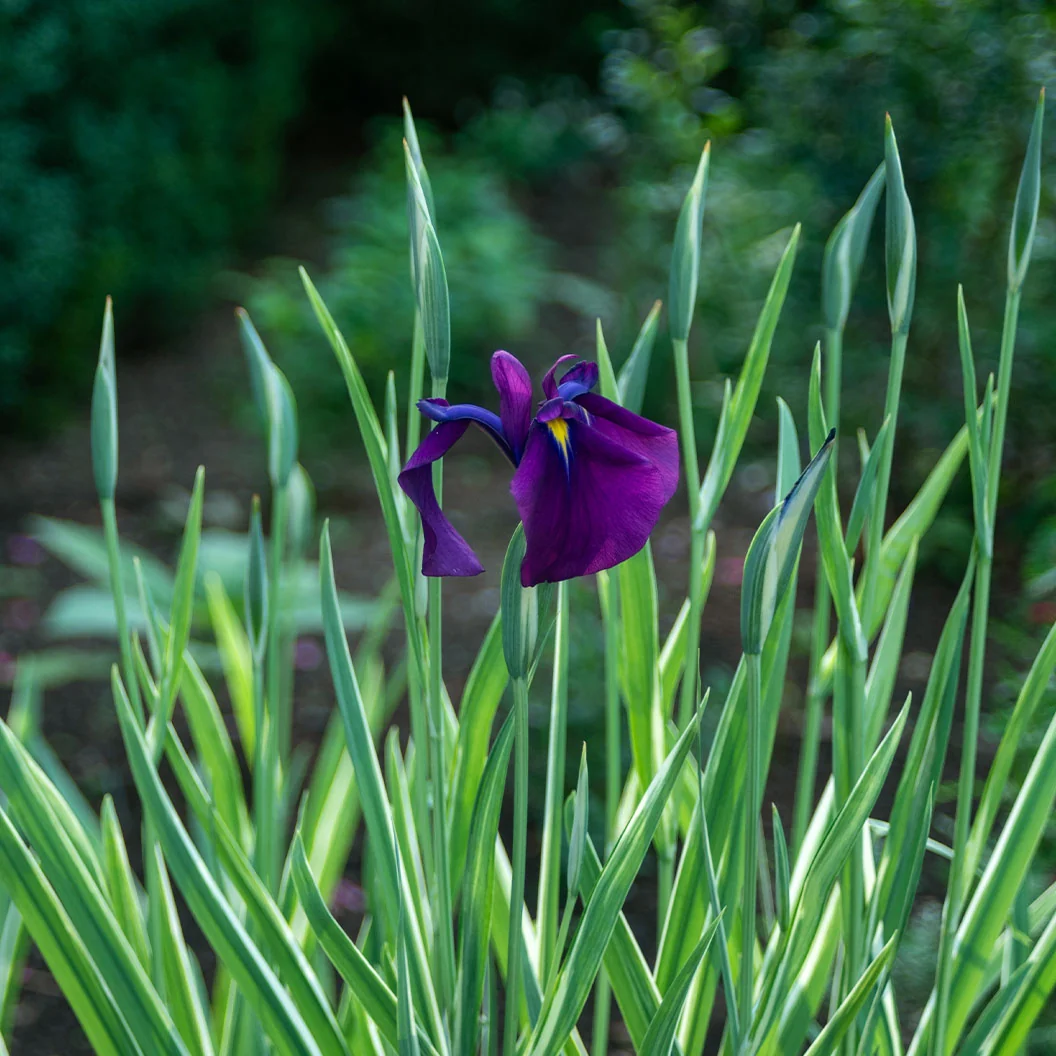
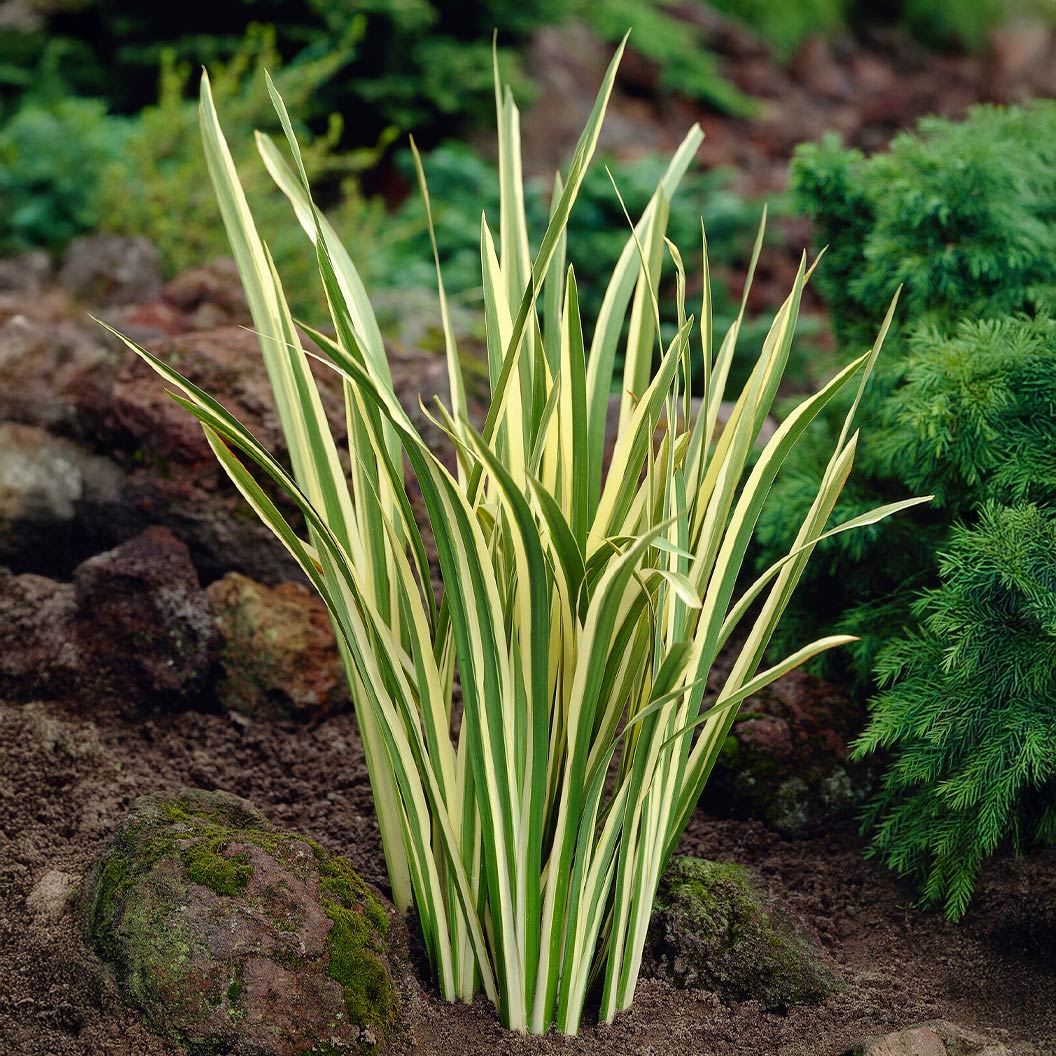
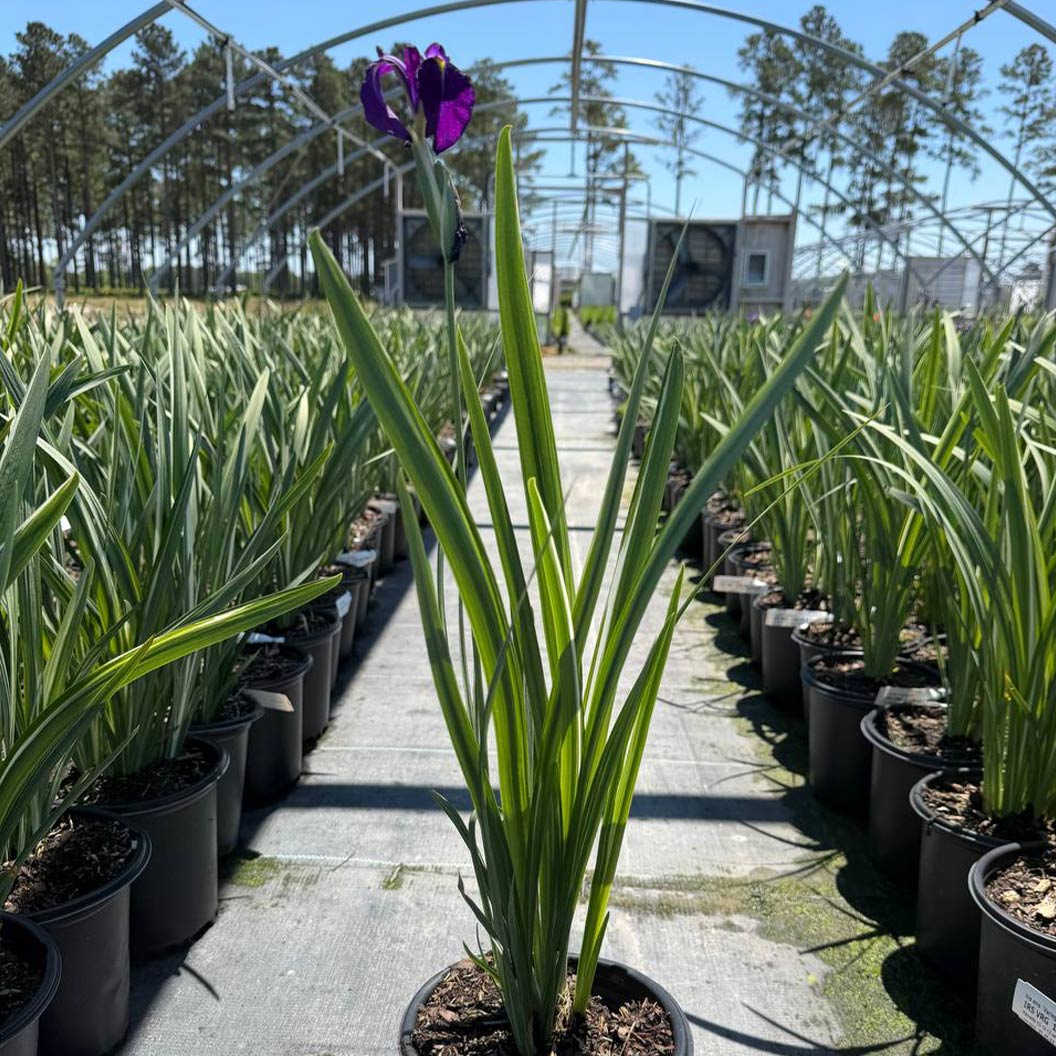
Striking variegated foliage with purple summer flowers
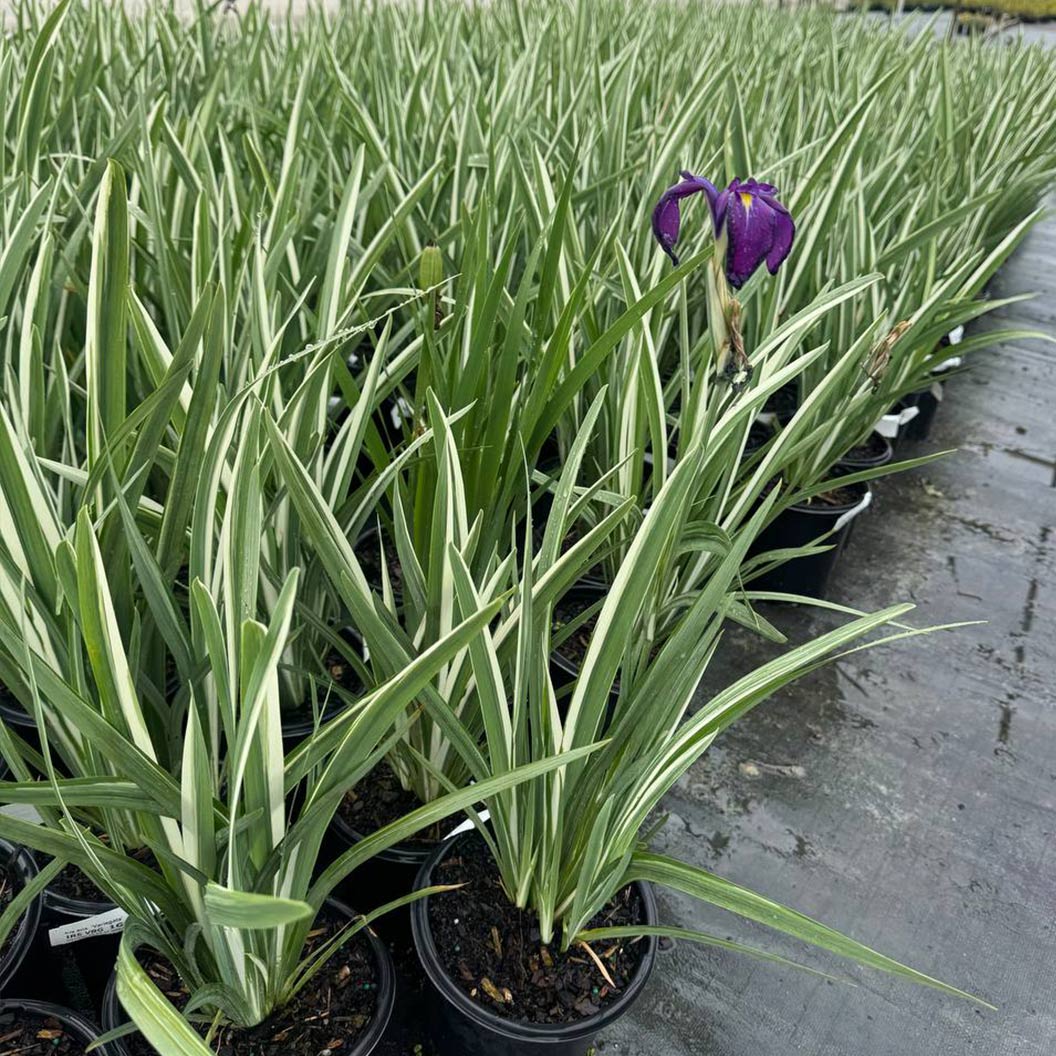
Beautiful variegated leaves hold their cream and silver-green striped coloration throughout the growing season, bringing vertical interest to garden beds, pond edges, and other consistently moist areas. Purple flowers with a red sheen appear in early to mid summer, standing above the upright foliage for an attractive seasonal display.
This iris grows best in full sun with ample water and rich soil that is somewhat acidic. It is a good choice for adding vertical structure and unique foliage to rain gardens, waterside plantings, or damp perennial borders.
Planting & Care
1. Planting: Plant or repot within 4 weeks of arrival. Choose a full-sun location with acidic soil that remains consistently moist. Plant the rhizome about 2 inches deep, then water thoroughly. Avoid dry, sandy sites unless the soil is amended to retain moisture. Though Japanese iris thrive in moist soil and can even handle standing water during the growing season, their rhizomes will rot if exposed to wet, heavy soils during winter. To avoid this, transplant Japanese iris into drier conditions at the end of the growing season if poor drainage is an issue in winter.
2. Watering: Provide ample water, especially during active growth and flowering. Keep the soil evenly moist and do not allow the plant to dry out for extended periods. Reduce watering after the foliage dies back for winter.
3. Pruning: Remove spent flower stalks after blooming. Leave the foliage in place through the growing season, then cut it back to a few inches above the ground after it yellows or is damaged by frost.
4. Fertilizing: Apply a balanced or low-nitrogen fertilizer in early spring as new growth begins. A second application after flowering can support healthy foliage and rhizome development. Avoid excessive fertilizer.